


WESTERN PAGASETIC
Marine biodiversity in the Western Pagasetic Gulf
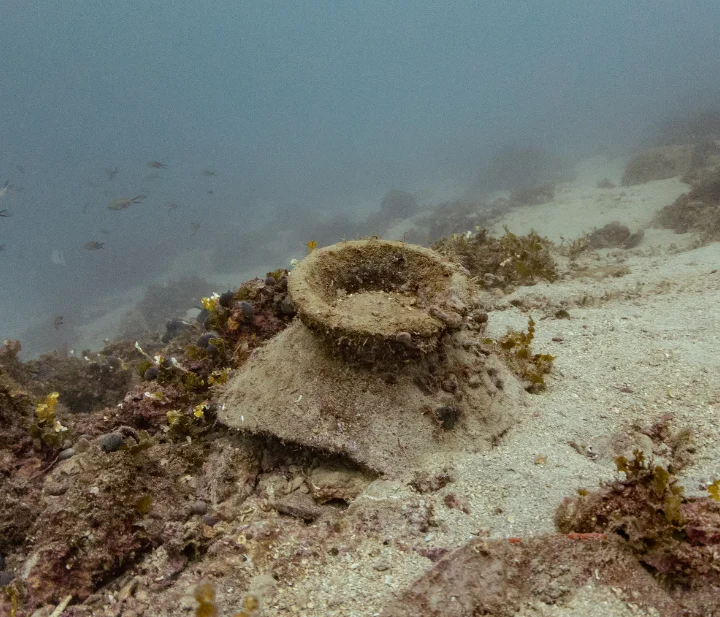
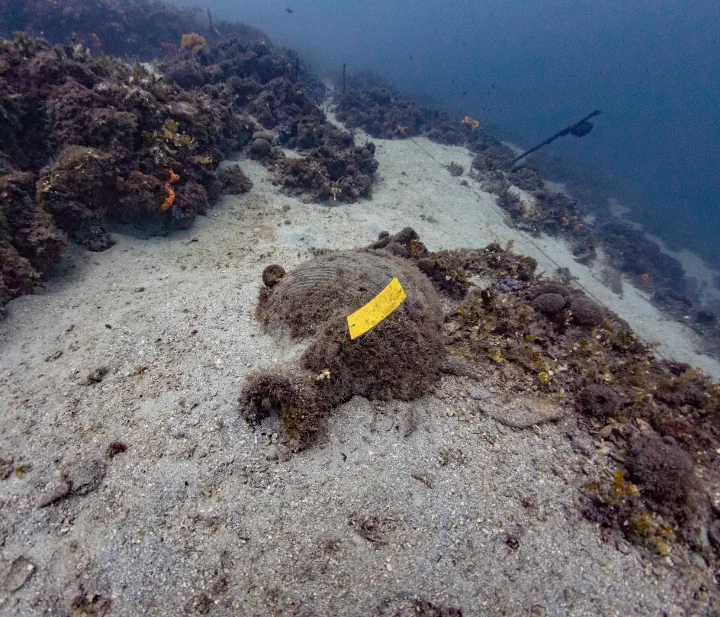
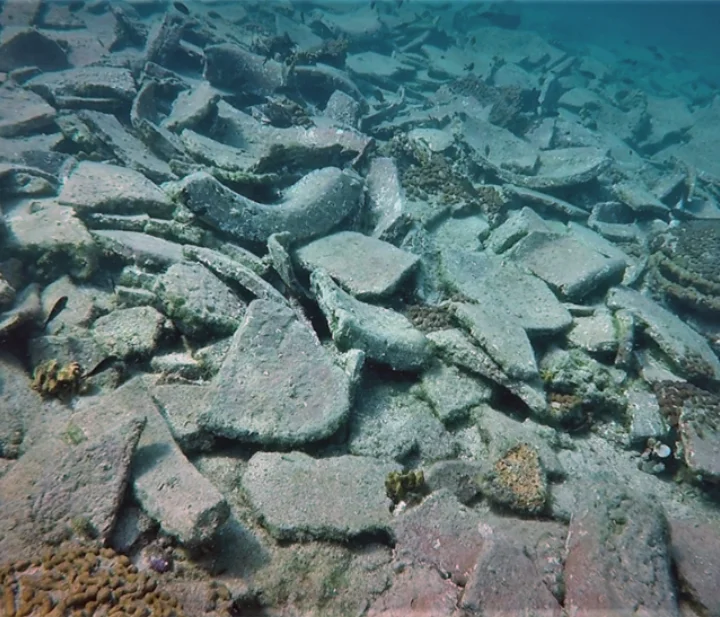
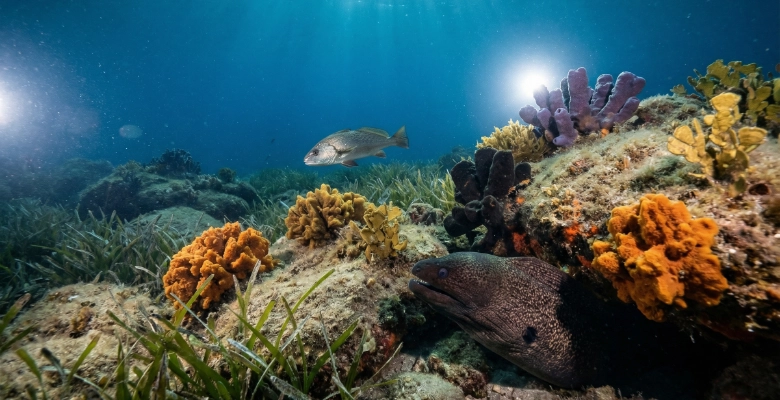
The Western Pagasitic Gulf is an area of particular ecological value, with critical marine habitats that support a rich and diverse marine life. A total of 46 species of aquatic organisms have been recorded in the area around the three shipwrecks, including 13 species of macrophytes and macroalgae, 25 species of invertebrates, and 8 species of fish.
Mediterranean macroalgae
Of particular importance is the macrophyte Cymodocea nodosa, which was identified in the Kikinthos shipwreck and is protected by the Bern and Barcelona Conventions, as an indicator species of healthy coastal ecosystems. The seabed of Amaliapolis is dominated by characteristic Mediterranean macroalgae, such as Halimeda tuna, Codium bursa and Flabellia petiolata, which form underwater “refugees” for the accommodation of various marine organisms.
Invertebrates, structural organisms and endangered fish species
Furthermore, the area is rich in invertebrate species, including the sponges Agelas oroides, Chondrilla nucula, Chondrosia reniformis, and Aplysina cavernicola, which constitute essential structural organisms of the marine ecosystem.
Among the fish fauna, Muraena helena (moray eels) and Sciaena umbra (yellow-headed gurnard) stand out, which have been included by the International Union for Conservation of Nature (IUCN) in the Red List of Threatened Species.