



Late antiquity shipwreck
Skantzoura
A shipwreck from the Late Classical period has been discovered near the island of Skantzoura. The find offers valuable information about navigation and trade in the Aegean during the 4th century BC, shedding light on aspects of marine life and trade networks of the time.

The shipwreck and the trade routes of antiquity
The discovery of the shipwreck near the island of Skantzoura in 2008 was based on oral testimonies from residents of Alonissos. Archaeological research revealed a rich cargo of amphorae and tableware, which attest to trade relations with areas such as Thassos, Mende and the Black Sea.
Despite the damage it has suffered, the ancient shipwreck on the island of Skantzoura remains an excellent example of archaeological evidence of trade and navigation in the Northern Sporades during the late classical period.
The discovery
It was in 2008 that the whispers of the inhabitants of Alonissos began to gain new interest. For years they had been talking about small vases that had been pulled from the sea, about a shipwreck that existed somewhere nearby — but no one would point out its exact location. Until one of them, A. Stamatiou, decided to share his knowledge.
Under his guidance, the team of the Ephorate of Underwater Antiquities managed to locate the shipwreck: a ship from the late classical period, sunk just 110 meters off the southwestern coast of the island of Skantzoura. A silent testimony to ancient trade, which had been waiting for centuries to come to light again.
The ship
The shipwreck near the island of Skantzoura appears to have been part of a merchant fleet operating in the Aegean Sea during the 4th century BC. Although its wooden structure has not survived — due to environmental conditions and the activities of antiquities smugglers — the arrangement of its cargo on the seabed provides essential clues to its size and dimensions. It is likely a medium-to-large ship, designed to transport large quantities of goods.
The concentration of amphorae, combined with the presence of table and storage vessels, reveals the nature of the cargo: a variety of goods, probably wine and other products, destined for trading posts in the Aegean and Black Seas. This shipwreck constitutes a valuable evidence of the commercial activity and maritime networks of the late classical period.
The cargo
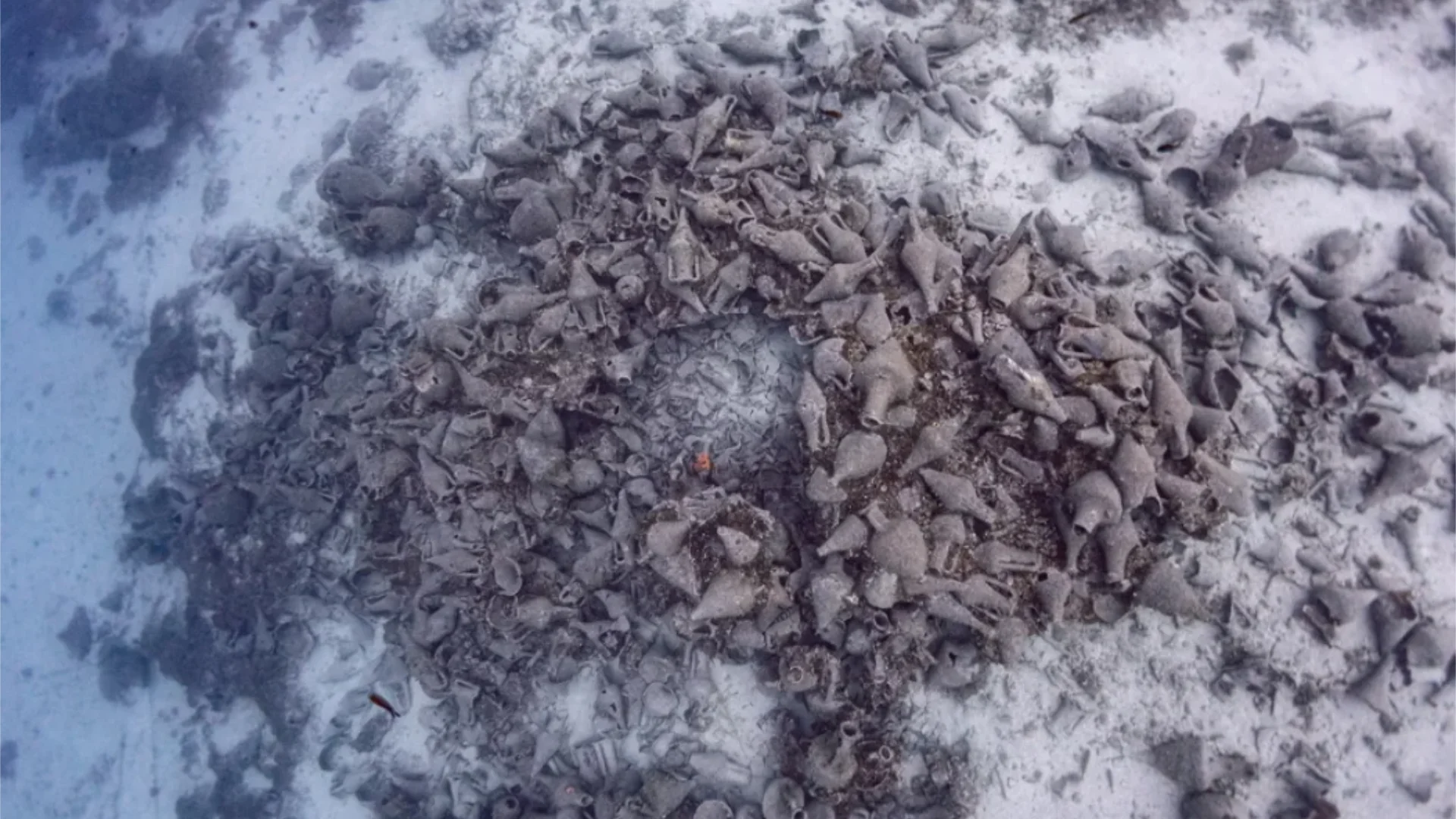
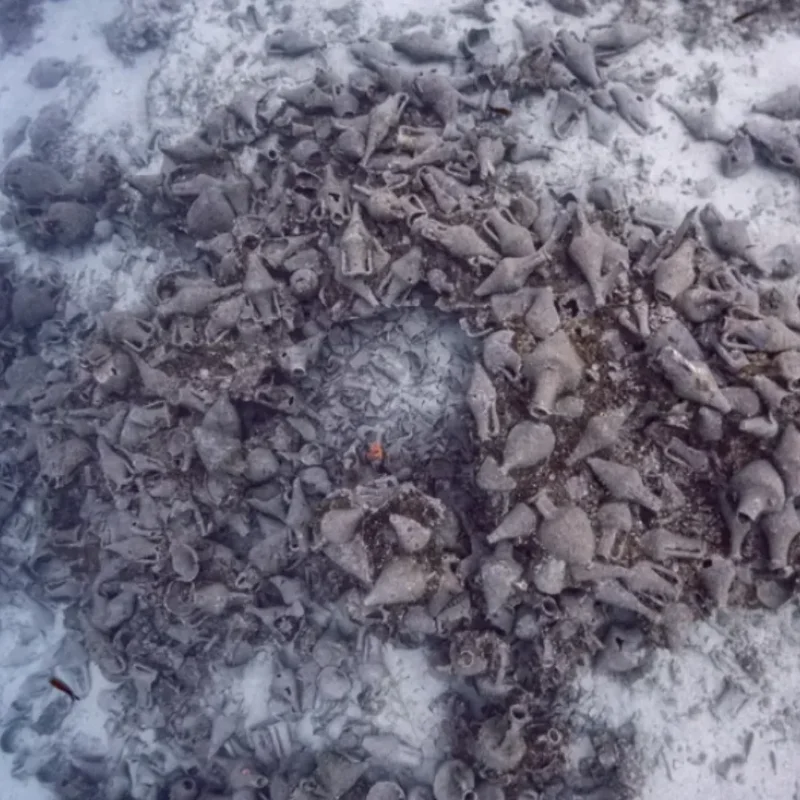
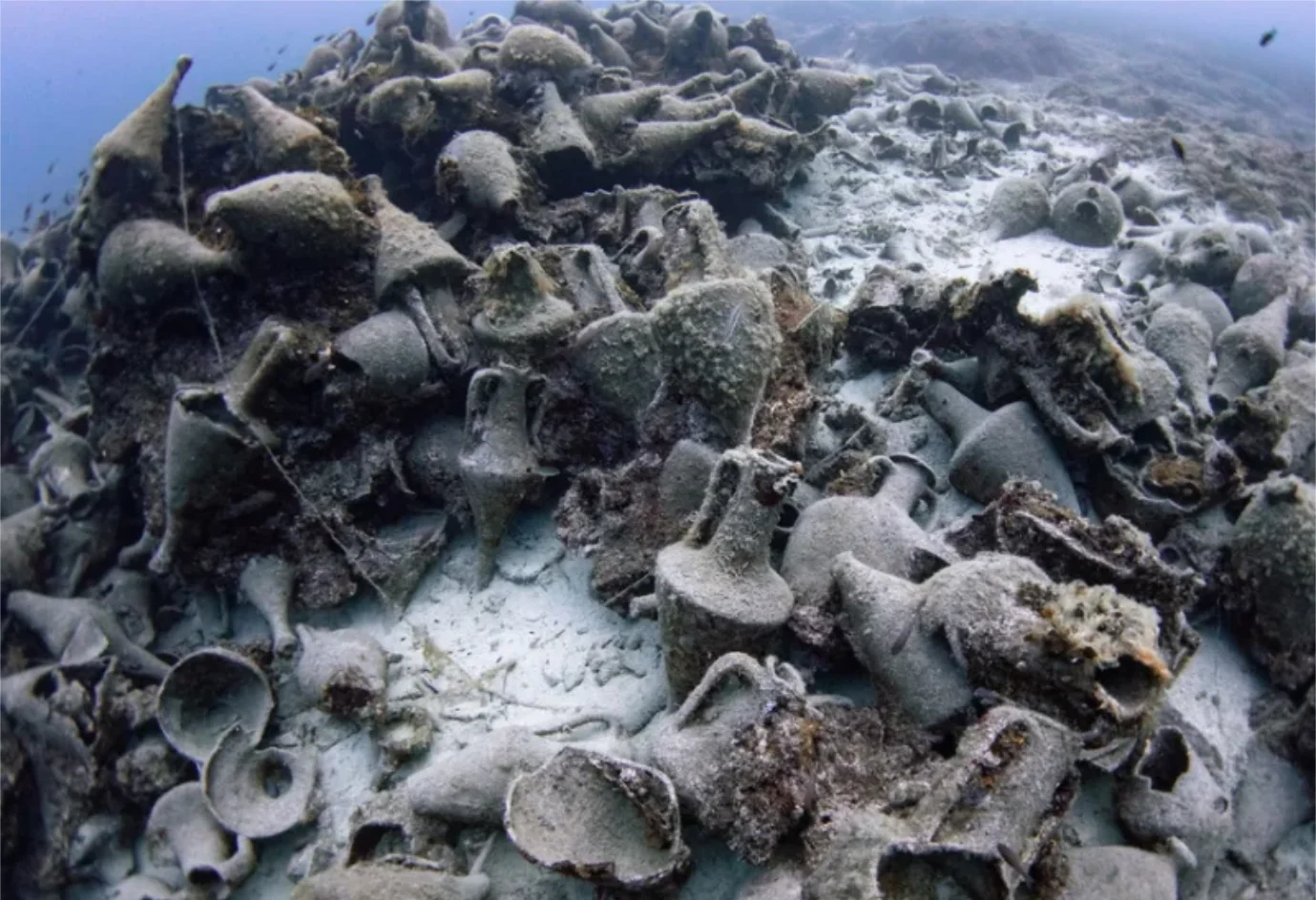
The wreck’s cargo is scattered on the slope of the rocky coast, covering the seabed at a depth of -29 to -38 meters. The total area it occupies is approximately 27 × 12.5 meters and consists mainly of amphorae, which are concentrated in various locations.
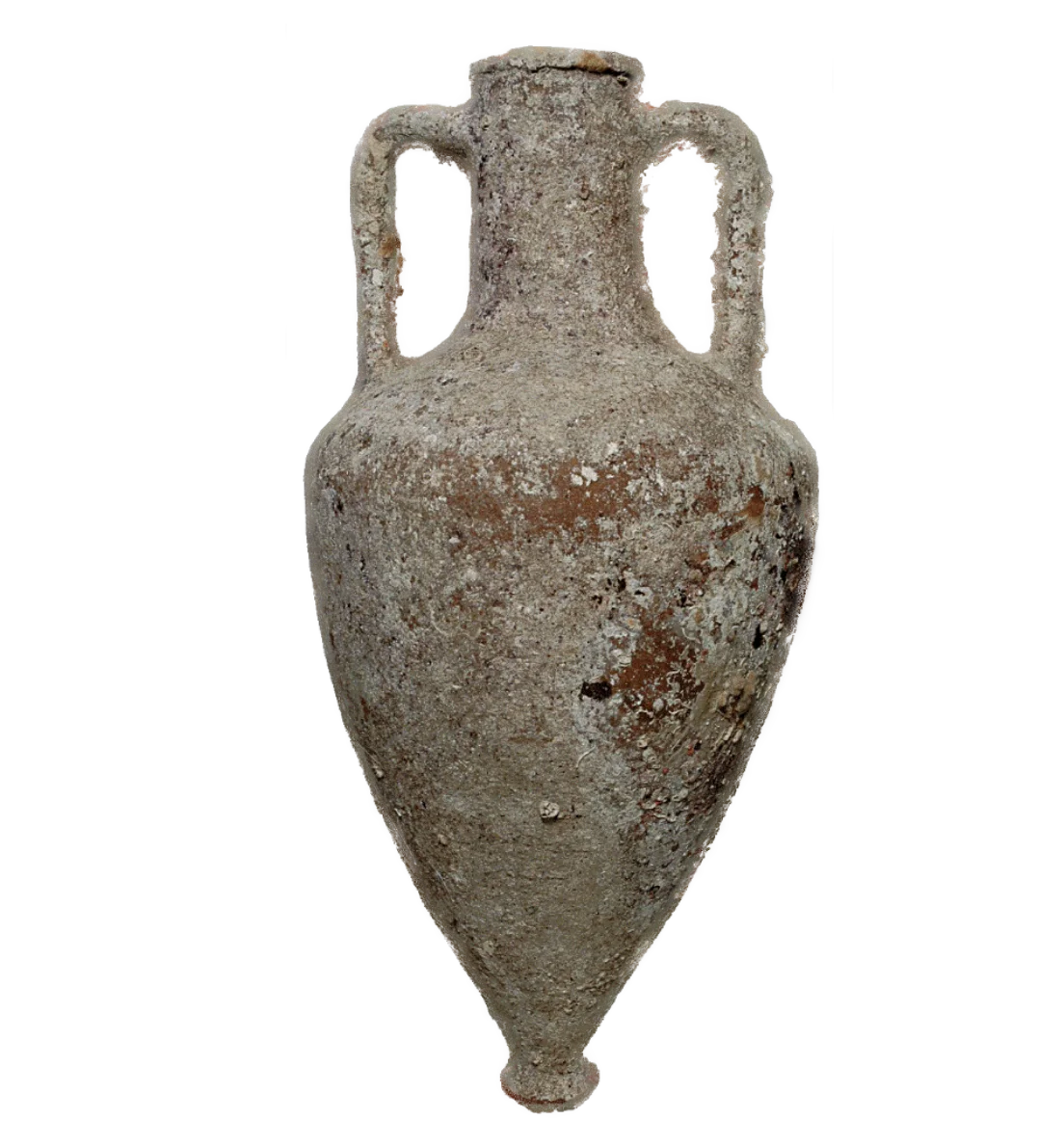
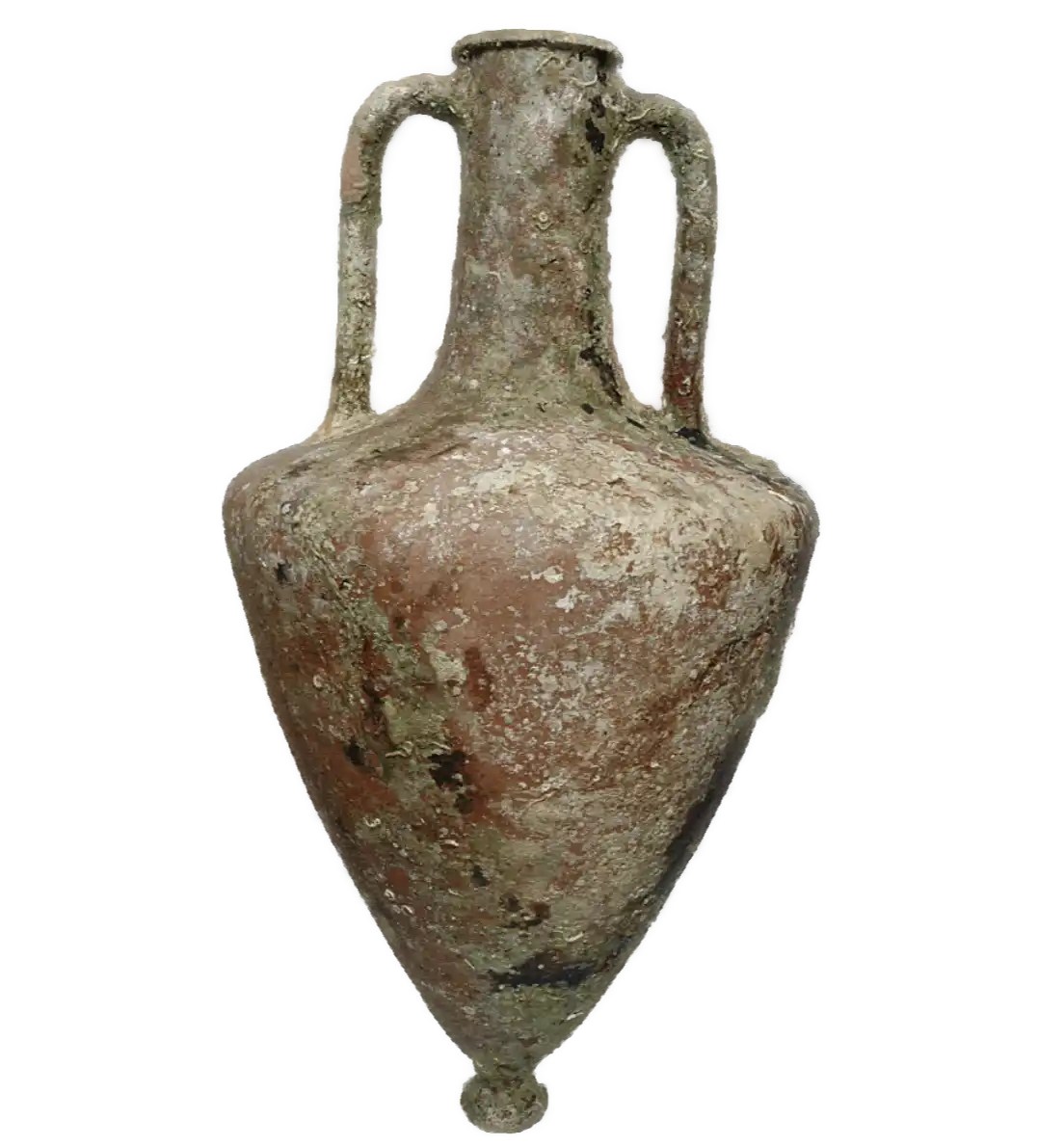
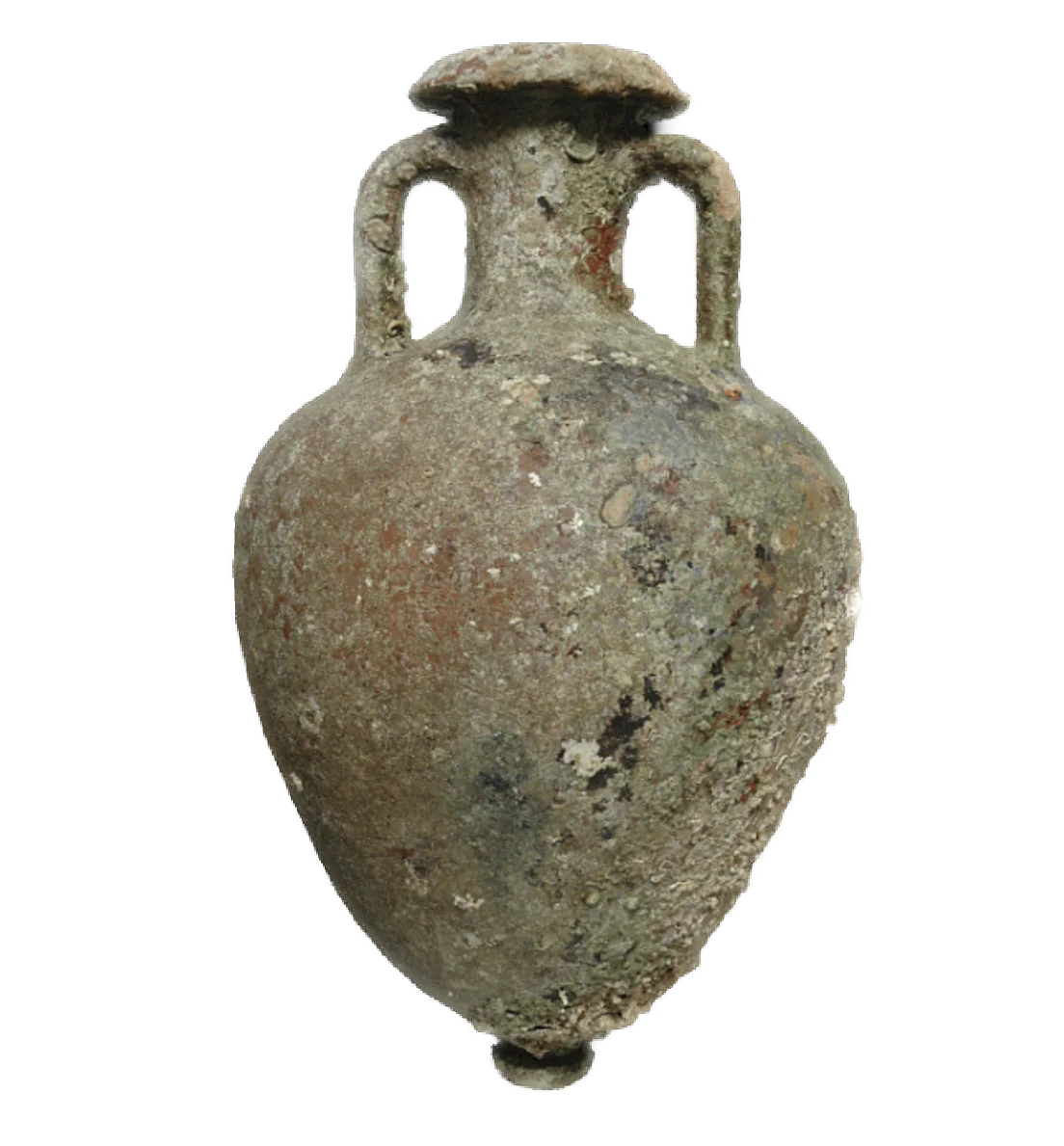
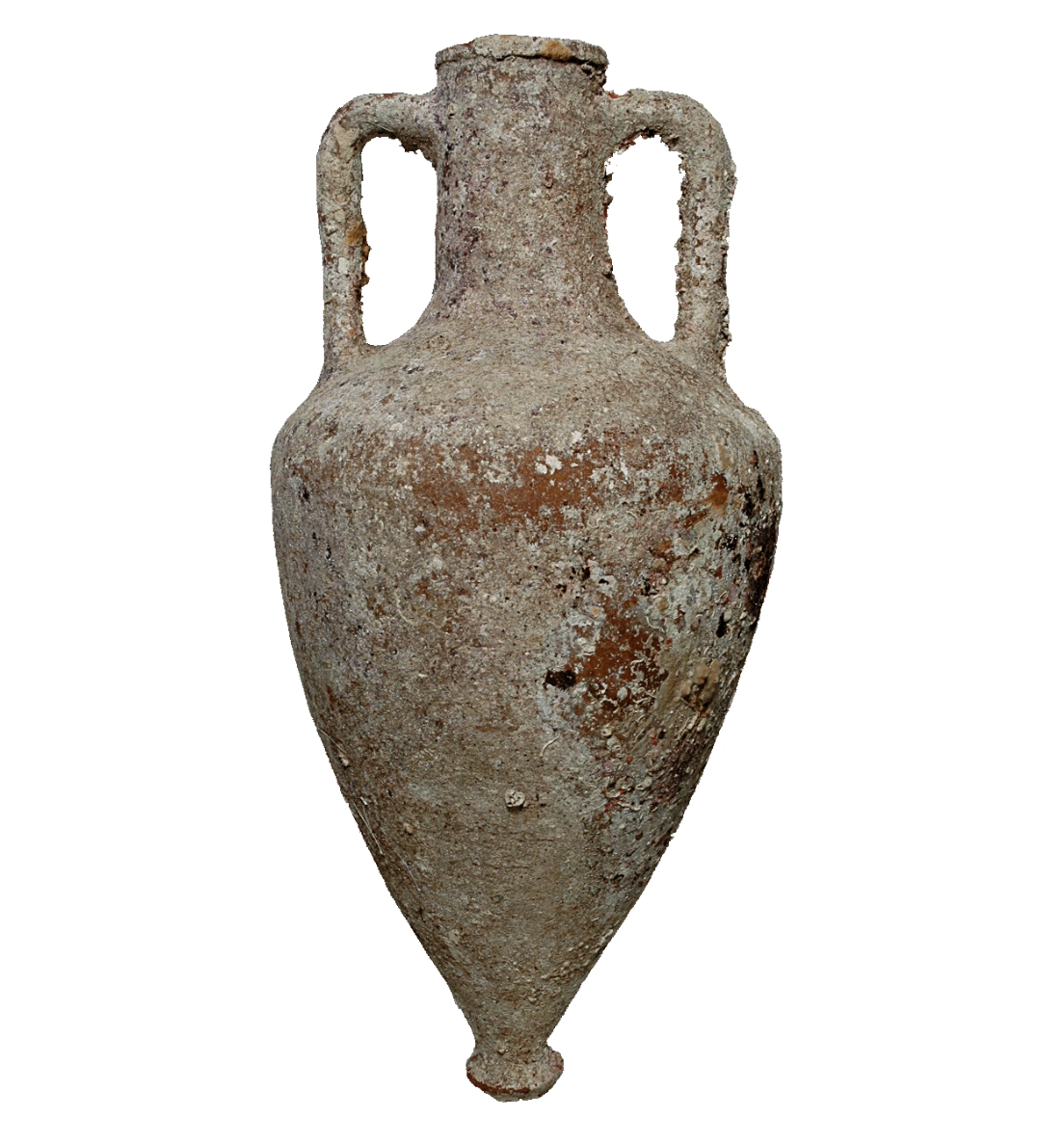
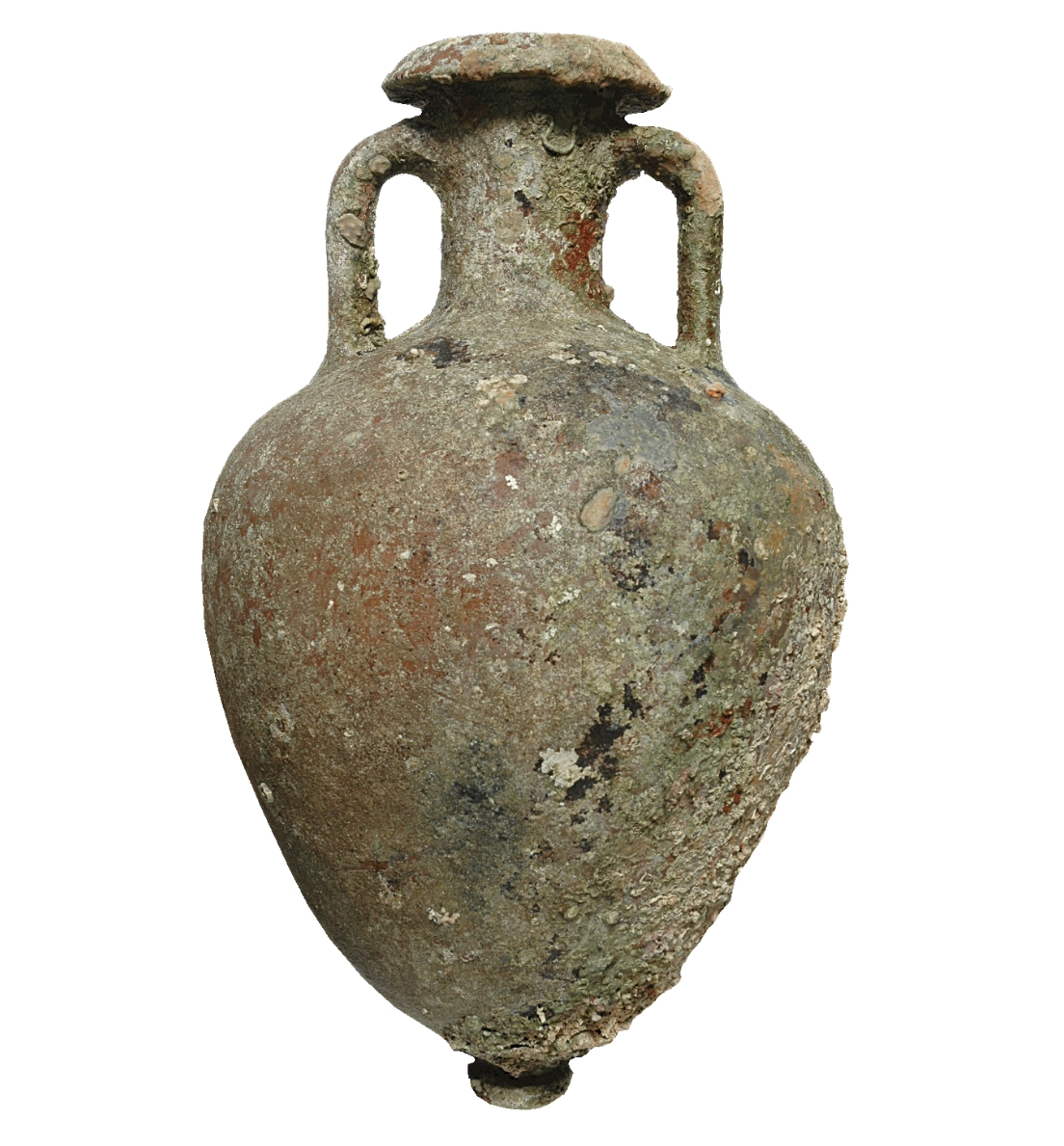
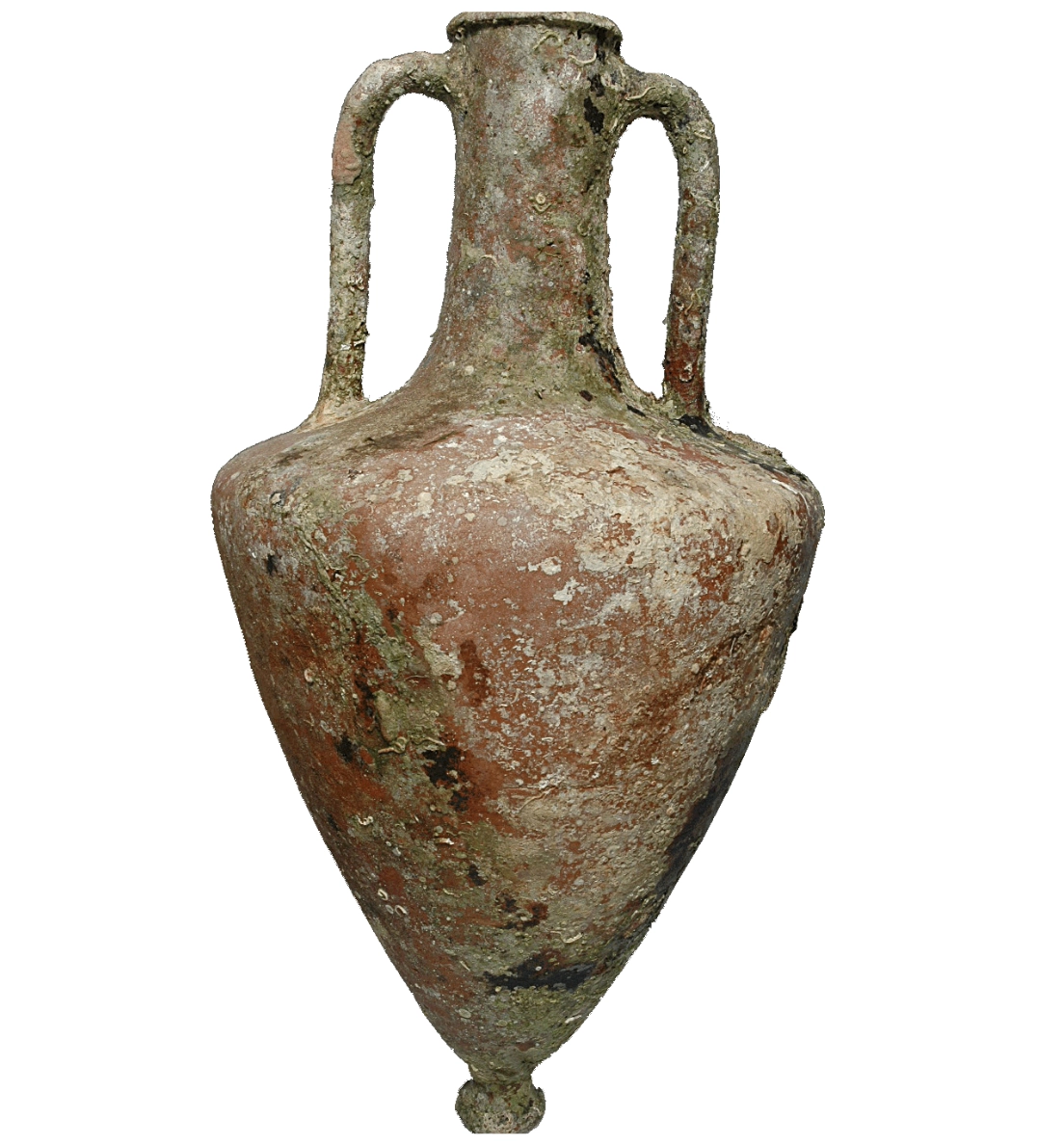
In the eastern, shallower part of the wreck, a large cluster of packed amphorae dominates, in which amphorae of the Thasos, Mendis and Solocha I types are mainly found. Further west, a second, smaller cluster is seen, while others, almost destroyed due to the activity of antiquities smugglers, can be distinguished. Individual finds of amphorae are encountered down to a depth of -38.5 meters, following the slope of the rocky bottom and the sandy areas formed between the seabed terraces.
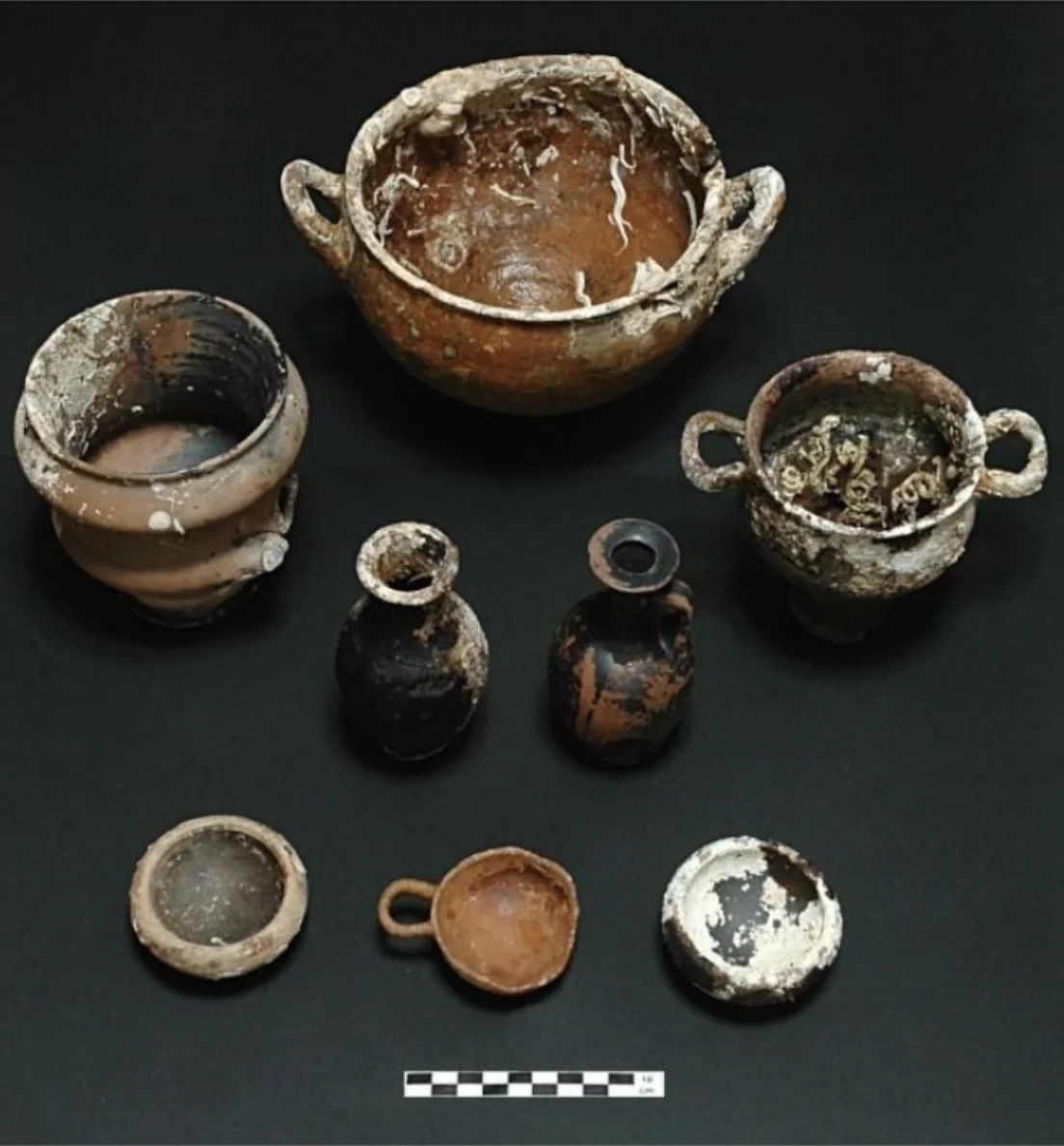
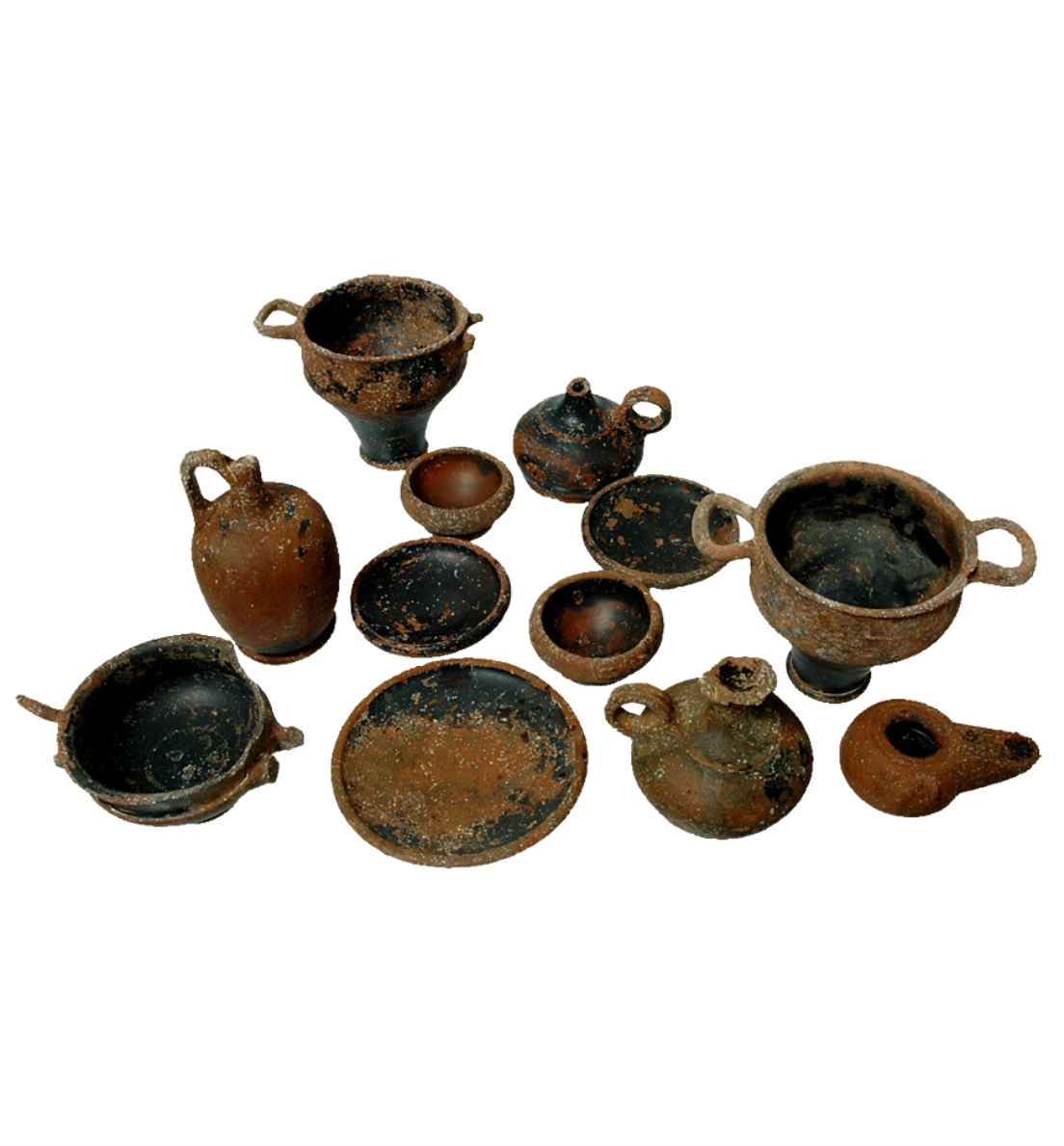
Scattered among the amphorae, especially to the west of the first cluster, are Attic vessels, both table and storage. Among them, type A skyphoi stand out, as well as vessels such as Guttus-type pot, kantharis, kylices, kyathia, small plates, lekythi and lamps. The cooking and storage vessels also include cauldrons, a bucket and the shells of large pithons. Lead pieces of various types are also found scattered on the bottom.
Mende, a colony of Eretria on the western coast of Chalkidiki, was famous since antiquity for the production of its excellent quality wine, which is also mentioned in ancient sources, such as Athenaeus and Demosthenes. Mende’s wine was exported throughout the Aegean and Mediterranean, contributing significantly to the economic prosperity of the city.
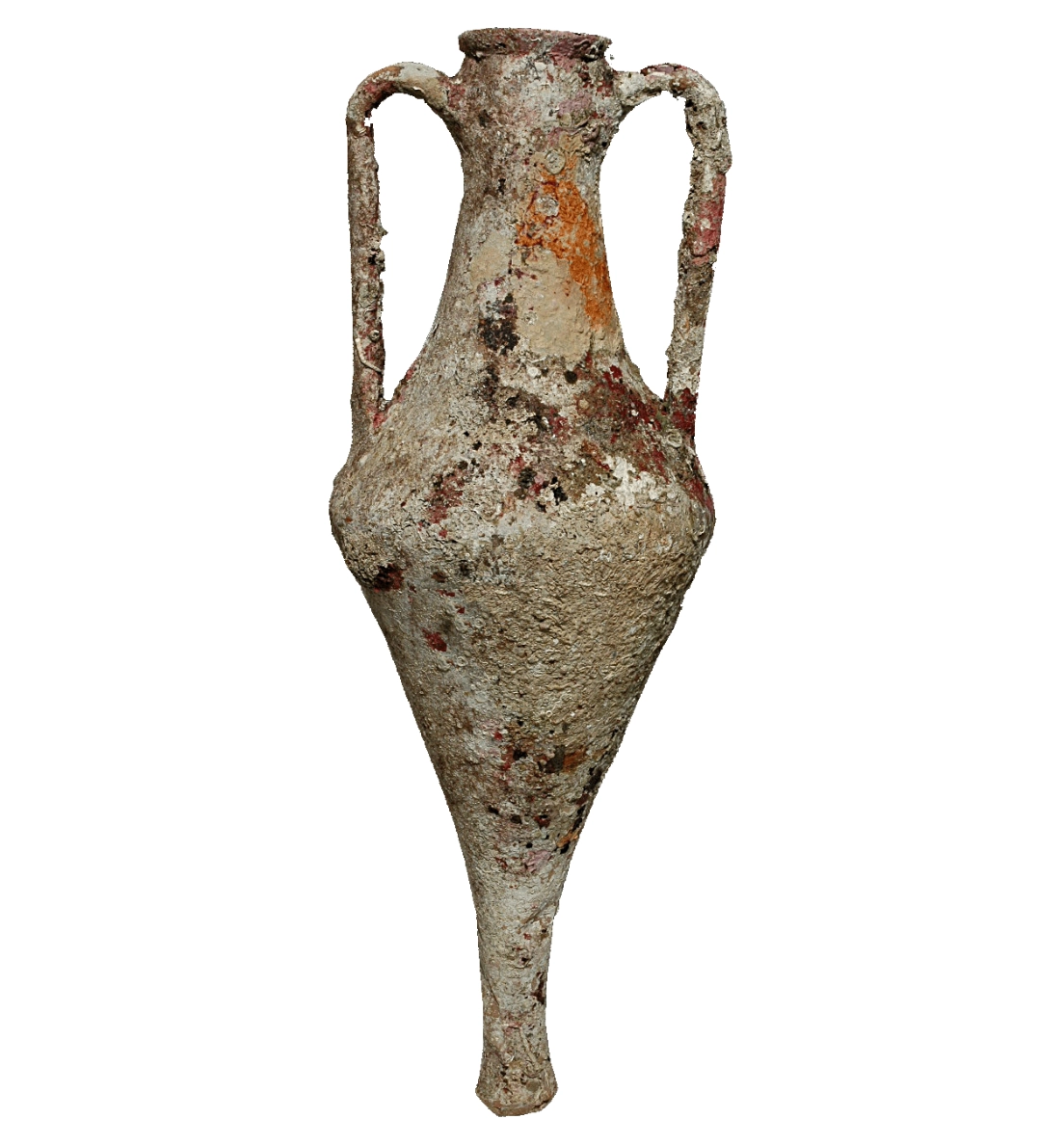
The pointed-bottom “Mende” amphorae served as the region’s main export vessel and were among the most widespread commercial amphora types of the 5th century BC. They are characterized by their elongated shape, narrow neck, curved body, and conical base — features that facilitated stable loading in ship holds and the efficient transport of large quantities of liquid goods.
The island of Peparithos (present-day Skopelos) is called in ancient sources “evrotis”, that is, an area with abundant and good grapes. It created an amphora with its own characteristics that has been found in many areas of the Aegean, but also of the Black Sea.
This type of vessel belongs to the category of commercial amphorae that archaeologists describe as pointed-bottomed (oxypythmenoi) due to their shape. This ergonomic base made the amphorae easier to handle and more resistant to stress, but most importantly, allowed for the optimal use of the ship’s storage space. It enabled the amphorae to be loaded in successive layers without leaving significant gaps between them, resulting in a compact cargo that minimized the risk of shifting and potentially dangerous tilting of the ship.
The amphora type known as Solocha I takes its name from the Solocha tomb in the northern region of the Black Sea, where it was first identified. These amphorae were produced in the Greek colonies of Asia Minor and the Black Sea — mainly in Heraclea Pontica and Sinope — and are dated to the late 5th and 4th centuries BC. They were primarily used for the transport of wine but also carried other agricultural products.
Solocha I amphorae are characterized by their relatively elongated neck, thin walls, and pointed base — features that made them ideal for long-distance maritime transport. Their presence among the cargo of the Skantzoura shipwreck indicates the exchange of high-value goods within an extensive international trade network.
Thasos was one of the most important centers of wine production and trade in the northern Aegean from as early as the 6th century BC. Its amphorae are easily recognizable by their distinctive shape, featuring a relatively broad body, short neck, and pointed base. Many bear stamps with the names of prominent magistrates or workshops, which provide valuable evidence for the dating and organization of production on the island.
The Thasian wine, renowned for its high quality, was exported throughout the Aegean and the Mediterranean, reaching as far as the Black Sea.
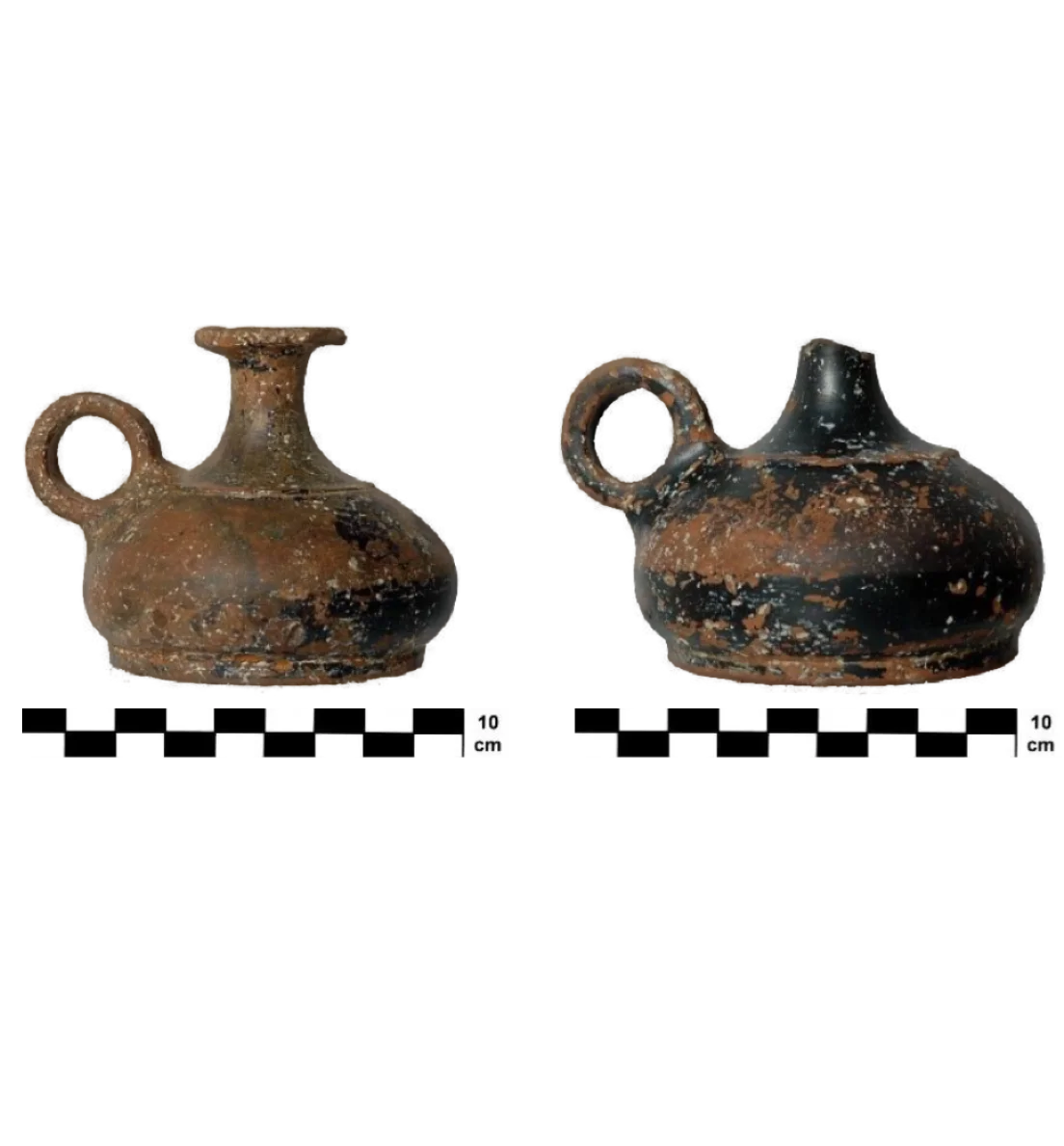
The Guttus-type flasks are small vessels used for pouring and transferring liquids — mainly wine or oil — in small quantities. The term guttus derives from the Latin word gutta (“drop”), indicating their function as containers designed for controlled flow. They appear widely in the Greek world from the late 5th century BC, and by the 4th century BC they are common finds in both domestic and funerary contexts.
Gutti usually have a round body, a low profile, a narrow mouth, and one or two handles. They often bear decorations or embossed patterns, indicative of their laboratory origin. The presence of such vessels in the Skantzoura shipwreck is likely associated with the crew’s equipment or with commercial cargo of small value, which complemented the transport of the wine amphorae.
Finally, small vessels such as kyathoi, kantharoi, skyphoi, red-glazed cups, black-gazed kantharokylikes and prochoi of the Classical period were also uncovered, likely belonging to the symposium ware used by the ship’s crew. These vessels, often made of fine clay and carefully decorated, provide valuable insight into the habits and daily life of ancient sailors.
The flasks of Guttus type typically have a round body, low profile, narrow mouth, and one or two handles. They are often decorated with relief motifs or painted designs that reflect their workshop of origin. The presence of such vessels in the Skantzoura shipwreck is likely associated with the crew’s personal equipment or with low-value trade goods that complemented the ship’s main cargo of wine amphorae.


Bibliography & additional information
- Preka – Alexandri, K. (2007). The work of the Ephorate of Underwater Antiquities, AD 62, Chronicles, Athens: TAPA, 1415 – 1428.
- Preka – Alexandri, K. (2008). The work of the Ephorate of Underwater Antiquities, AD 63, Chronicles, Athens: TAPA, 1394 – 1405.
- Preka – Alexandri, K. (2009). Preliminary underwater archaeological research at Skandira (Skantzoura, Northern Sporades), Archaeological Project of Thessaly and Central Greece 3, Volos: Ministry of Culture, Tourism, University of Thessaly, 709-717.
- Preka – Alexandri, K. (2018). Aspects of the work of the EEA and preliminary research of the shipwreck at Skandira in the Northern Sporades, in A. Simosi (ed.), Dives into the Past: Underwater Archaeological Research, 1976 – 2014, Athens: TAPA, 174 – 184.
- Tagonidou, Aik. (2018). The shipwrecks of the National Marine Park of Alonissos, Northern Sporades, in A. Simosi (ed.), Dives into the Past: Underwater Archaeological Research, 1976 – 2014, Athens: TAPA, 164-166.