


Underwater research in Asini (October 2024)
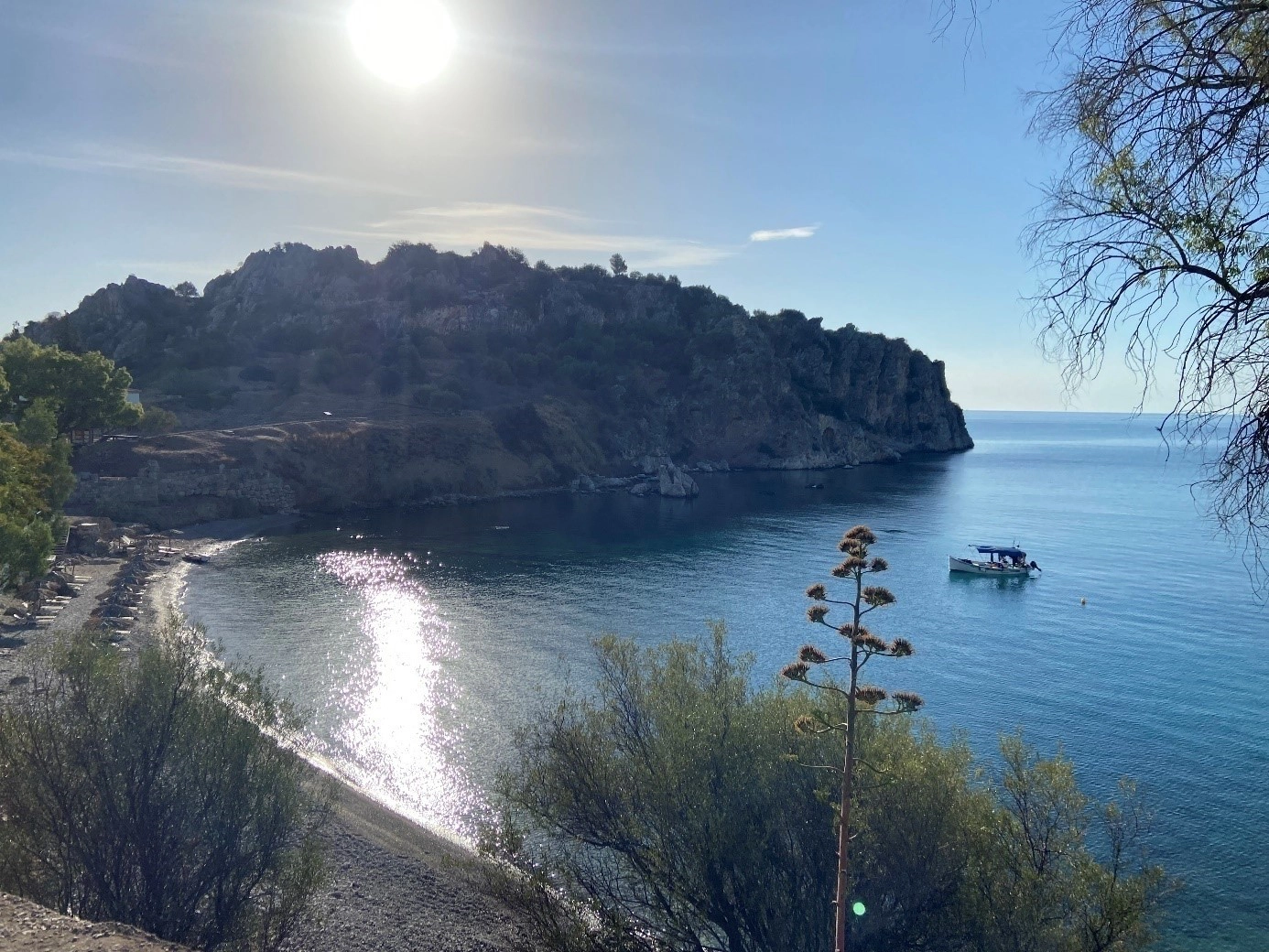
Between 7 and 11 October 2024, underwater archaeological research was conducted near the archaeological site of Asini, located east of Tolo, Argolida. The site is located within a short distance from the present-day village of Tolo. Thanks to its favorable location, this site was inhabited both during prehistoric and historical times.
International cooperation and research program
The excavation research was carried out as part of a five-year research program that began in 2022, as a follow-up to the pilot research conducted in 2021 and was a collaboration between the Ephorate of Underwater Antiquities, the Swedish Institute at Athens and the University of Stockholm, with participants from the University of Gothenburg and the company Nordic Maritime Group. The Greek side was led by Dr Panagiota Galiatsatou, Diving Archaeologist of the Ephorate of Underwater Antiquities, and the Swedish side by Professor Ann-Louise Schallin (Scientific Director, Stockholm University) and Dr Niklas Eriksson (Field Director, Stockholm University). Also participating were Ms Ekaterini Tagonidou, Diving Architect-Engineer of the Ephorate of Underwater Antiquities, Mr Themistoklis Troupakis, Diving Engineer, BA Jens Lindström, from the Nordic Maritime Group and MA Staffan Von Arbin, from the University of Gothenburg.
Previous expedition findings
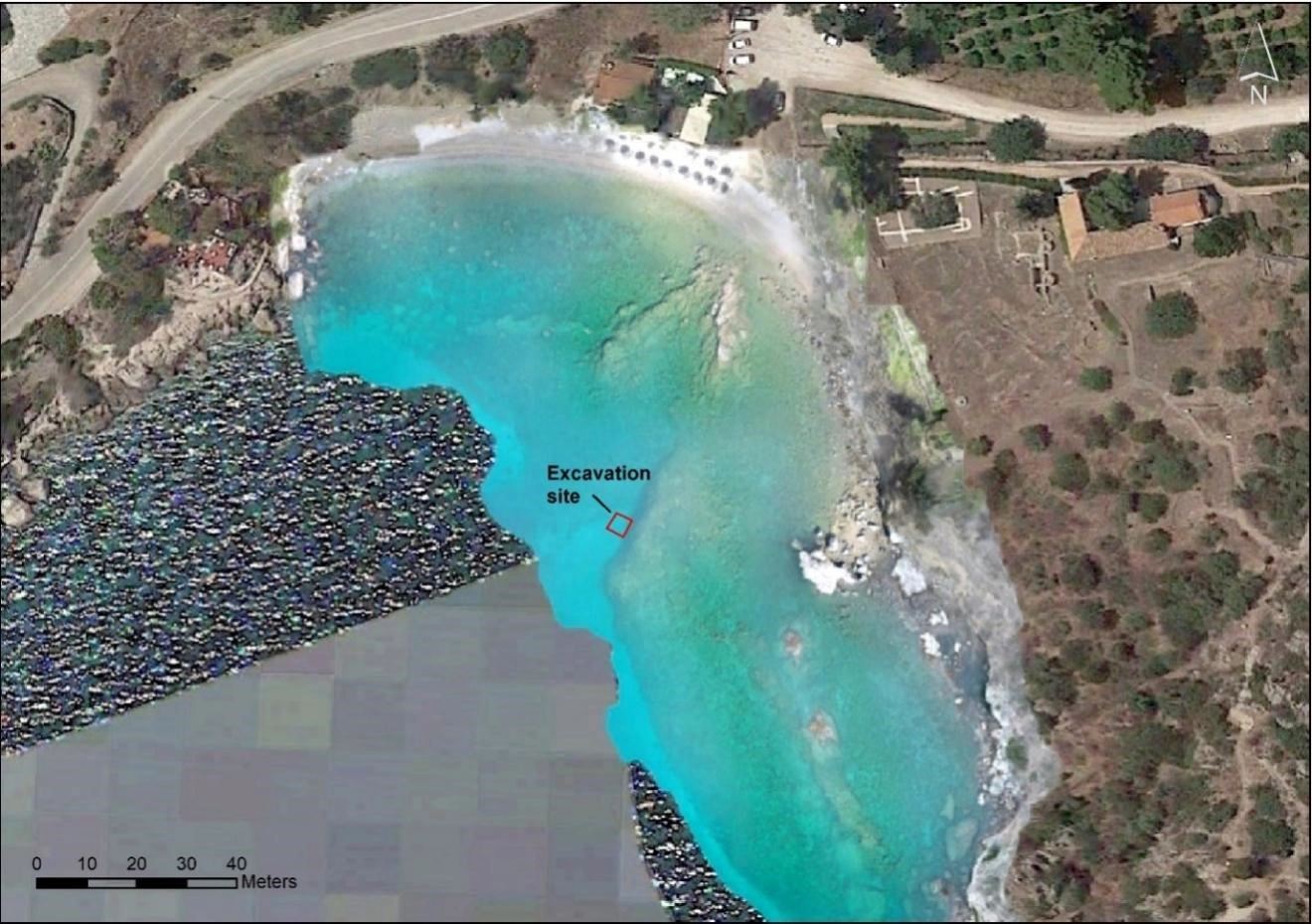
The archaeological investigations of 2021 and 2022 had revealed the extent and nature of a large artificial port facility east of the Kastraki site. The main structure consists of a large artificial plateau located in shallow water. On this plateau, rooms and building structures in the form of houses can be seen, possibly. These remains were recorded using photogrammetry during the 2022 research period, as they required more in-depth research. As the settlement of Asini has been continuously inhabited since prehistoric times, it isn’t easy to ascertain when this port facility was initially constructed.
Focus of the 2024 research
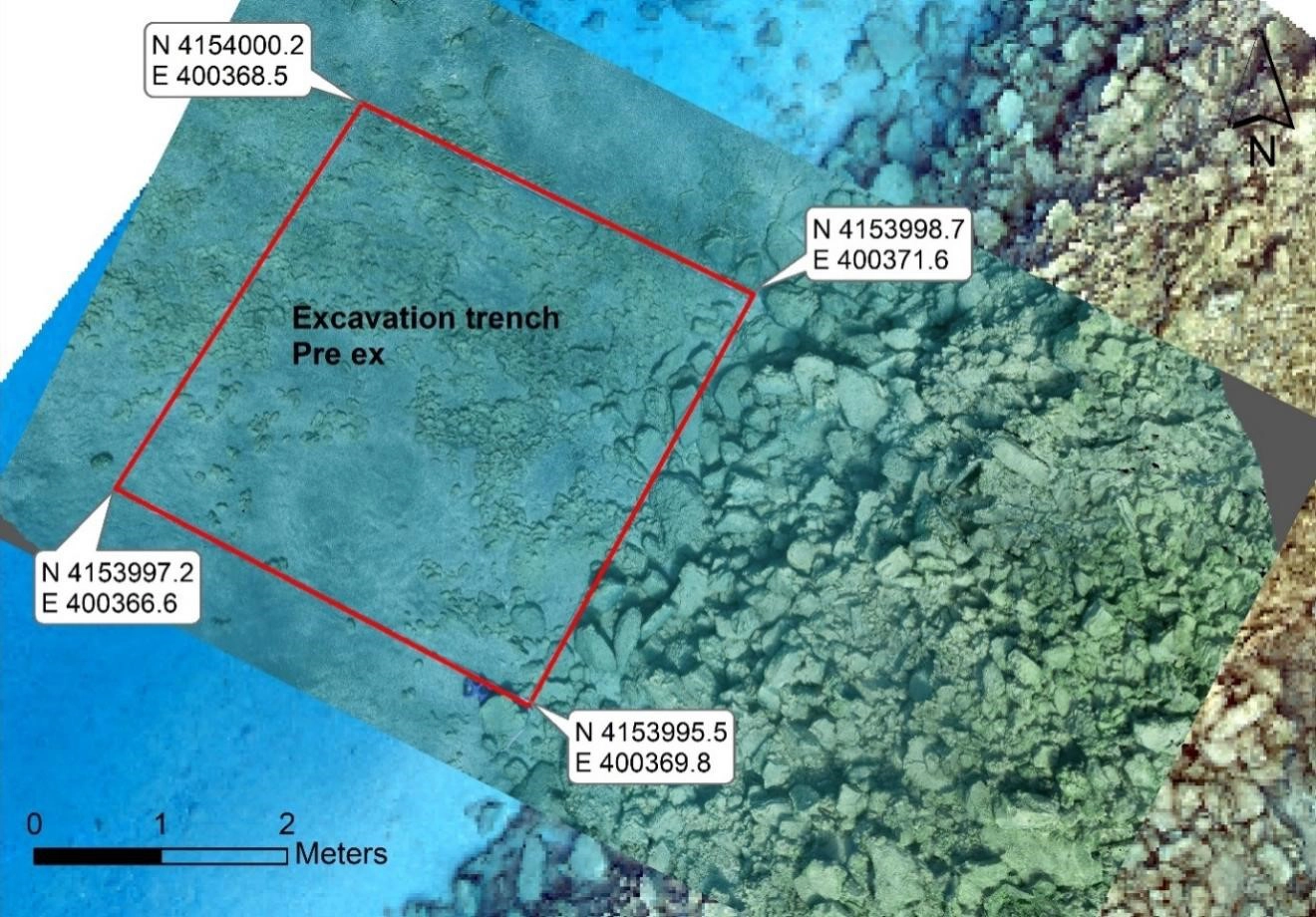
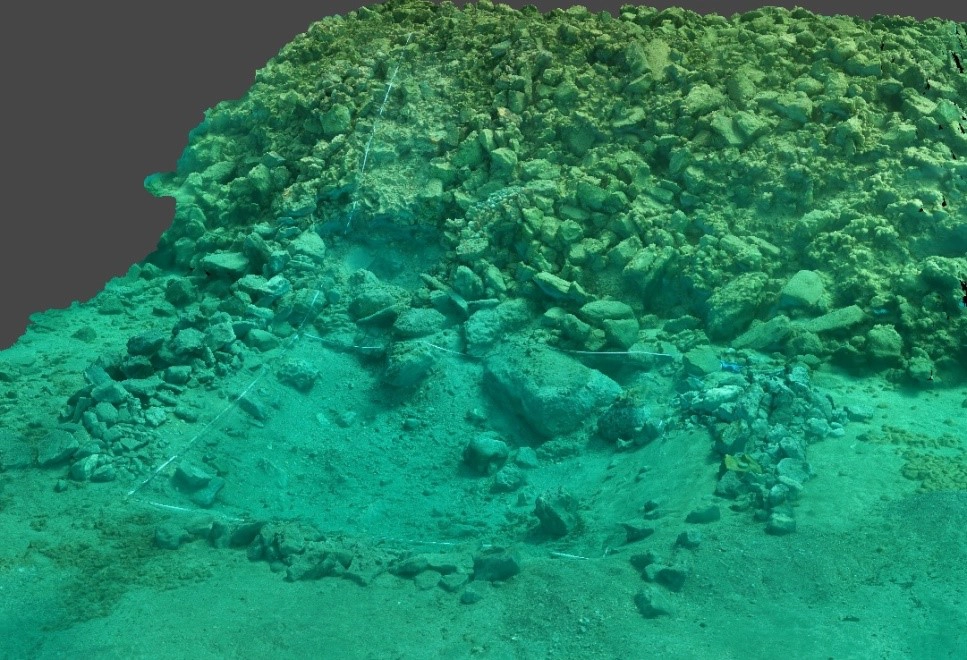
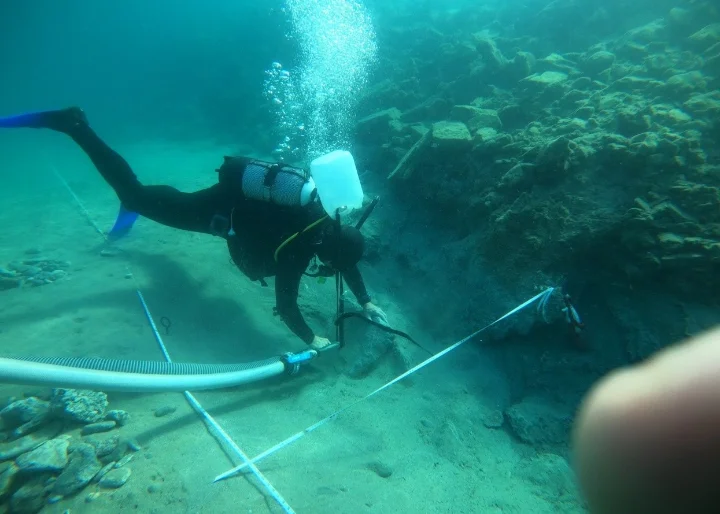
The 2024 underwater excavation research focused on the seabed near the northwestern edge of the artificial plateau. This particular site was chosen because the artificial plateau is preserved in good condition, and it appears to have retained a large part of its original shape. The area occupied by the excavation section was 16 sq.m. The excavated area was documented using photogrammetry at points where the diversity and variety of the archaeological ensembles necessitated it.
Important findings and dating
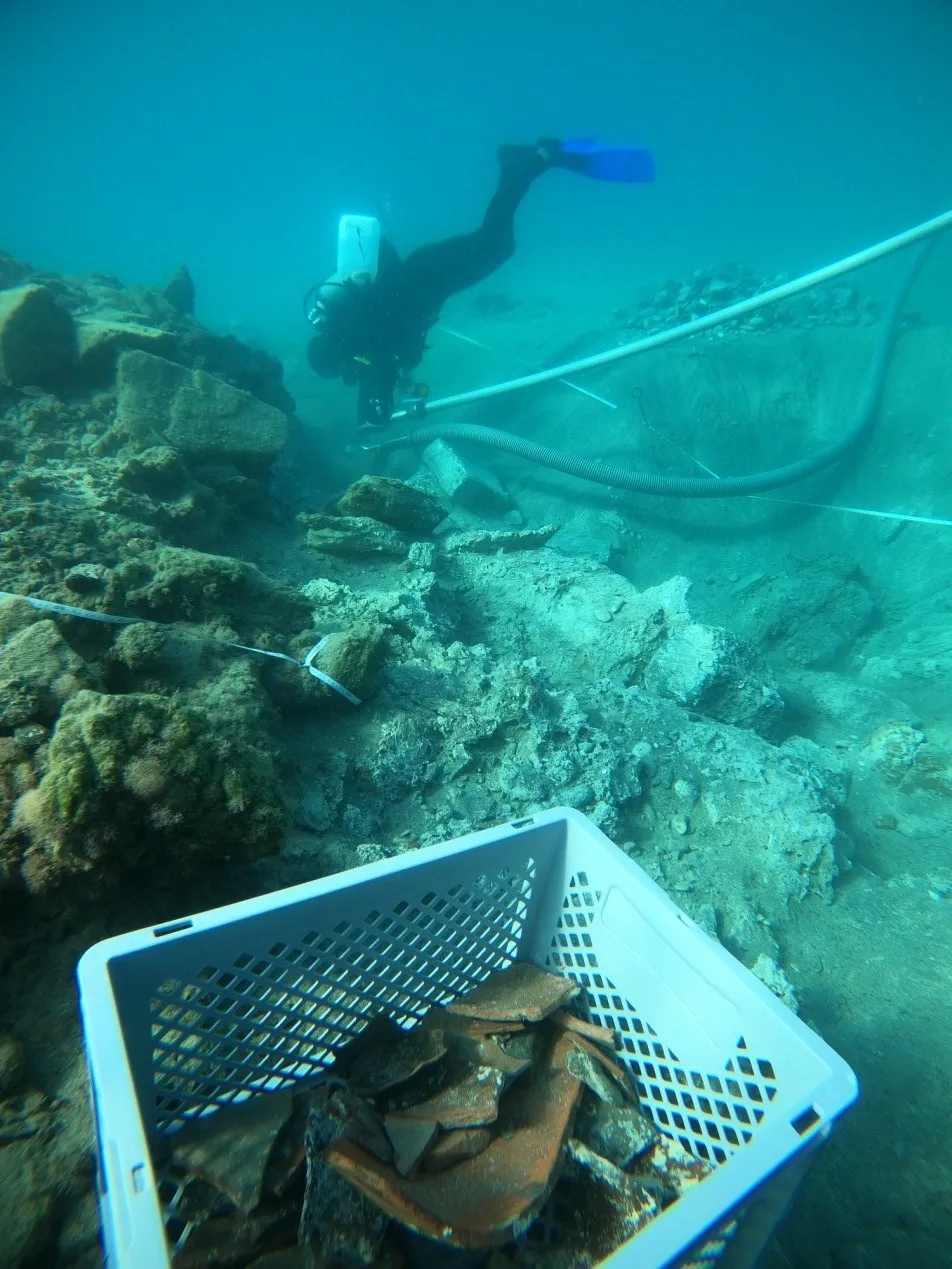
The 2024 fieldwork revealed that significant remains of the stone-built port facility are preserved at the site’s bottom. These consist of fallen material, such as stones and processed building materials. Probably the most important findings are the amphora sherds found in the stone-built structure and the broken vase in sector 4A. The assemblages of these fragmentarily preserved vessels suggest that they were deposited during the use of the plateau or at the time of its abandonment and collapse. They can therefore be used as clues in the discussion about the dating of the construction.
Next steps of the research
The next step will be to make one or possibly two cuts at the top of the plateau. The cut will be excavated manually, and the sediments will be removed by dredging. Any objects and building remains will be recorded in situ using photogrammetry.
Publication of results
The results of the research will be published in the scientific journal of the Swedish Institutes at Athens and Rome, Opuscula, and in other scientific journals.