

ALONNISOS –
NORTHERN SPORADES
Marine biodiversity in Alonissos and the Northern Sporades
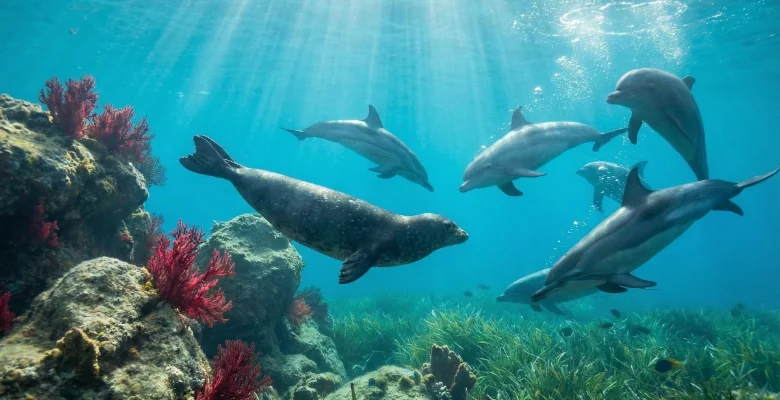
The National Marine Park of Alonissos Northern Sporades (NMPAS) is one of the most important centers of marine biodiversity in the Mediterranean. It hosts one of the largest and most stable populations of the Mediterranean monk seal Monachus monachus in the world. This species finds ideal refuge in the isolated caves and steep rock formations that characterize the islands of the region.
Cetaceans and seabirds in the Park
The area is also an important passage and feeding ground for various cetacean species. These include the striped dolphin (Stenella coeruleoalba), the bottlenose dolphin (Tursiops truncatus) and the common dolphin (Delphinus delphis). The waters of the Park are also an important habitat for many species of seabirds, such as the shag, the gull and the Aegean gull.
Critical marine habitats: Posidonia meadows, coral formations and rich fish fauna
The Park’s fish fauna is extremely rich, supporting both coastal fishing and the natural balance of the ecosystem. More than 300 species of fish and invertebrates have been recorded in the area.
The most critical marine habitats in the area include the Posidonia Seagrass Beds (Posidonia oceanica), one of the most vital habitats in the Mediterranean, which serve as a refuge and breeding and feeding areas for a multitude of marine organisms. Equally important are the coral formations, such as the red coral (Corallium rubrum) colonies that create complex underwater structures suitable for hosting marine organisms.